Zapytaj o wycenę
Funkcjonalne i zintegrowane systemy sufitowe
Metalowy sufit chłodzący
Promiennikowe sufity chłodzące z miedziano-aluminiowymi obwodami hydraulicznymi dostarczające 60-110 W/m2 cichego chłodzenia bez przeciągów dla biur i szpitali.
Material
Aluminum panel with copper/aluminum hydronic serpentine
Module Size
600×600 mm, 600×1200 mm and custom
Panel Thickness
Aluminum 0.6–1.0 mm
Cooling Capacity
60–110 W/m²
Certyfikaty
- EN 13964
- EN 13501-1: A2-s1,d0
- ISO 9001 quality management
Krótka odpowiedź
The chilled metal ceiling provides silent, draft-free radiant cooling of 60–110 W/m² using copper/aluminum hydronic circuits at 14–18 °C water temperatures. With demountable clip-in panels and A2-s1,d0 classification, it suits offices, hospitals and hotels.
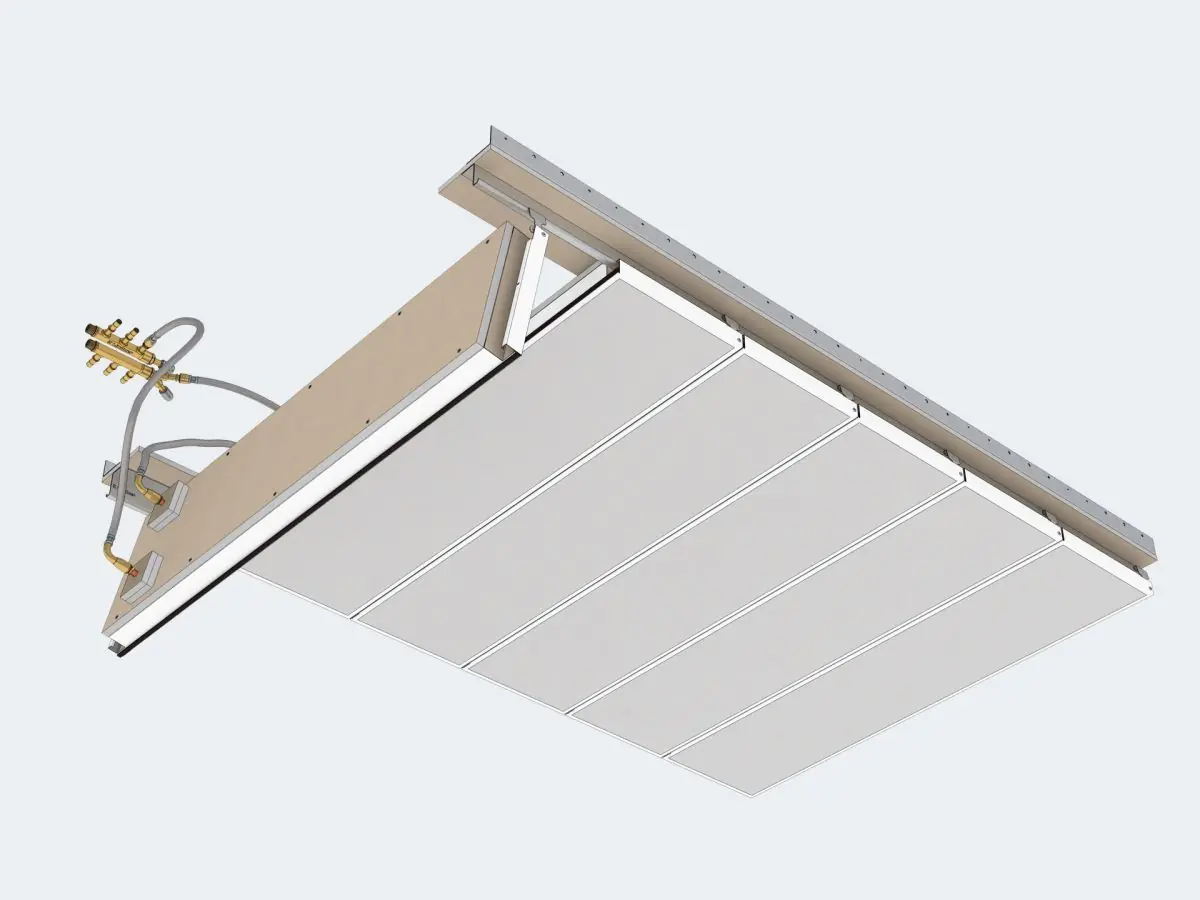
The chilled metal ceiling system is a radiant cooling solution that cools the space through copper/aluminum hydronic serpentine circuits integrated behind aluminum ceiling panels. Delivering a cooling capacity of 60–110 W/m² and operating with water temperatures of 14–18 °C, the system cools the ceiling surface, which then radiates comfort throughout the room.
The greatest advantage of radiant cooling is comfort: no forced air currents, no fan noise and no draughts. Heat is absorbed silently from all surfaces via the cooled ceiling. Circulating water at higher temperatures than conventional chiller regimes raises the efficiency of chillers and heat pumps, lowering operating costs. This is why the system is preferred in offices, hospitals, hotels, museums and every prestige building where silence matters.
Panels are produced from 0.6–1.0 mm aluminum sheet with a high-emissivity finish that maximizes radiant performance. Standard 600×600 mm and 600×1200 mm modules are complemented by custom sizes. Sound absorption can be provided through micro-perforation combined with acoustic tissue, documented by EN ISO 354 alpha-w reports. The full RAL palette is available in polyester powder coating.
Installation uses a clip-in carrier system; the demountable panels give easy access to the serpentine connections and services. Flexible connection hoses attach each panel independently, and dew-point sensors with humidity management are recommended to eliminate condensation risk. Besides acting as the visible cooling surface, the panel also functions as an EN 13964-compliant ceiling plane integrating lighting and other ceiling services.
The metal construction achieves fire classification A2-s1,d0 under EN 13501-1. Metaltavan manufactures radiant chilled ceiling projects in coordination with architects and mechanical engineers, with 30 years of production experience; typical lead time is 2–4 weeks and the product is delivered to 7 export markets.
| Material | Aluminum panel with copper/aluminum hydronic serpentine |
|---|---|
| Module Size | 600×600 mm, 600×1200 mm and custom |
| Panel Thickness | Aluminum 0.6–1.0 mm |
| Cooling Capacity | 60–110 W/m² |
| Water Temperature | 14–18 °C |
| Perforation | Plain as standard; optional micro-perforation with acoustic tissue |
| Acoustics | Alpha-w (EN ISO 354) report available with micro-perforation |
| Fire Classification | EN 13501-1 A2-s1,d0 |
| Weight | Approx. 4–8 kg/m² (dry) |
- Offices and administrative buildings
- Hospitals and healthcare facilities
- Hotels and conference halls
- Museums and galleries
- Courthouses and government buildings
- Recording studios and broadcast facilities
- Radiant cooling capacity between 60 and 110 W/m²
- Efficient operation with 14–18 °C water temperatures
- Silent climate control without draughts or fan noise
- Copper/aluminum hydronic serpentine circuits
- Easy service access via demountable clip-in panels
- High-emissivity surface finish for maximum output
- Integrated ceiling plane with lighting and services
- EN 13501-1 A2-s1,d0 fire performance
Instalacja i zastosowanie
- 1 Install hangers and clip-in carriers at the set level
- 2 Run main supply and return water pipes along the layout
- 3 Clip the panels onto the carriers
- 4 Connect each panel to the mains via flexible hoses
- 5 Carry out pressure and leak testing of the circuit
- 6 Commission the dew-point sensor and control automation
Częste pytania
Woda o temperaturze 14–18 °C krąży w wężownicach miedziano-aluminiowych za panelami; schłodzona powierzchnia sufitu promieniuje chłód do pomieszczenia z mocą 60–110 W/m², bez ruchu powietrza, przeciągów i hałasu wentylatorów.
Moc 60–110 W/m² pokrywa większość obciążeń wewnętrznych; wentylację i obciążenia wilgotnością obsługuje dedykowany system wentylacji. Moc na panel dobiera się wraz z projektem mechanicznym.
Czujniki punktu rosy i zarządzanie wilgotnością utrzymują temperaturę wody powyżej punktu rosy; przy prawidłowej strategii sterowania ryzyko jest wyeliminowane.
Panele clip-in są demontowalne, a elastyczne węże przyłączeniowe zapewniają łatwy dostęp do wężownic i instalacji.
Tak, poprzez mikroperforację połączoną z włókniną akustyczną; wartości alpha-w są udokumentowane wg EN ISO 354.
Biura, szpitale, hotele, muzea i budynki użyteczności publicznej, gdzie cisza i komfort są na pierwszym miejscu; typowy czas produkcji to 2–4 tygodnie.